European Business Cities
Europe’s commercial centres range from compact financial cores to sprawling office corridors and districts embedded in historic city fabric. Understanding those differences gives accommodation searches a more useful starting point than a city name alone.
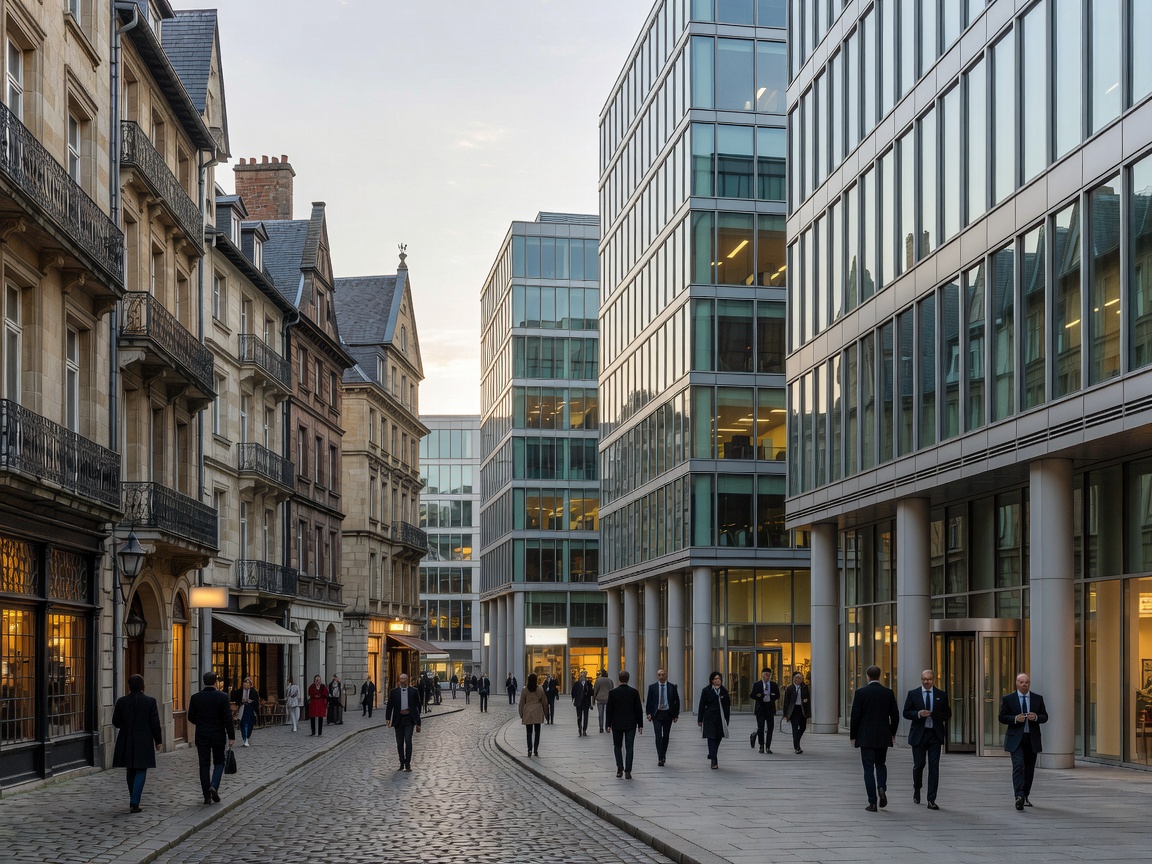
A business trip is experienced at street level: the station exit, the walk to a meeting, the cafés open between appointments. Yet the city’s larger structure determines how those pieces fit together. Some centres have one widely recognised financial district; others spread offices across several nodes. The distinction matters because a hotel near one cluster may be convenient for one itinerary and awkward for another.
London: a city of distinct clusters
London’s commercial geography is notably multi-centred. The City of London is an established financial district, threaded into the wider central city rather than isolated from it. Canary Wharf, by contrast, forms a separate concentration of offices in the east. Other commercial activity extends through central neighbourhoods, so the phrase “central London” does not identify a single office destination.
For accommodation, confirm the meeting address and the route to it rather than assuming that any central location is equally close. Rail terminals, Underground connections and walking conditions can make a nearby neighbourhood a practical base, while the City’s historic street pattern differs from the larger blocks and planned public spaces found in newer business areas.
Paris and Frankfurt: clear business identities
La Défense is a major business district outside Paris’s historic core, with a recognisable modern office landscape. Staying there can bring a visitor nearer to work in the district, while accommodation in central Paris places the trip among a broader mix of streets, culture and dining. The choice is a trade-off between direct district access and the appeal of a central-city base; transport and the exact meeting location decide how that trade feels.
Frankfurt’s Bankenviertel is an established financial area within a compact metropolitan centre. The main railway station, central streets and office quarter sit in a relatively close urban relationship, but a particular journey still depends on the address and route. The city’s financial concentration can make district names useful search terms, without making every nearby hotel equally convenient.
Amsterdam and Madrid: connected commercial landscapes
Amsterdam’s Zuidas is a planned business district with a strong relationship to transport and a more contemporary office setting than the old centre. The city centre retains a different scale and character, with canals, narrower streets and a varied mix of activities. A hotel search should match the business address first, then compare the route from other parts of the city.
Madrid’s AZCA is a prominent commercial area within the larger urban fabric. Its relationship with surrounding central neighbourhoods differs from a peripheral office park: the visitor may have several possible bases, each with different access and evening character. Compare the exact destination, the nearest useful transit connections and how much time the trip allows for crossing the city.
Milan, Brussels and Dublin
Milan’s Porta Nuova is a contemporary office and mixed-use district, while other business destinations sit in the city’s broader urban network. A central base may suit a varied itinerary; proximity to the named district may be more valuable when meetings are concentrated there. Milan’s commercial geography rewards checking the complete route rather than relying on a broad “near centre” description.
Brussels’ European Quarter is shaped by European institutions and related offices, alongside a city centre with a different pattern of streets and amenities. In Dublin, the Docklands is a regenerated commercial area beside the established city centre. The terms describe a useful general setting, not an assurance about any individual property’s facilities or convenience.
Compare structure, not prestige
Across these cities, consider five differences: how concentrated the offices are; whether the business area is historic, planned or regenerated; the relationship to the main centre; the available rail and urban transit pattern; and the surrounding services after office hours. A larger district may offer an efficient cluster of meetings but require careful attention to its boundaries. A mixed commercial area may feel more connected to everyday city life, yet spread work destinations farther apart.
Other centres—including Barcelona, Munich, Zurich, Vienna, Luxembourg, Copenhagen and Stockholm—also have their own arrangements of finance, government, technology and transport. Avoid transferring assumptions from one capital to another. A map search should begin with the actual office, venue or conference address, then expand to nearby districts that have workable routes.
Turn the city view into a stay plan
For a short visit, prioritise a direct, dependable morning journey. For several days, consider whether dining, shops and a comfortable evening walk matter as much as office proximity. If a trip includes meetings in separate parts of town, a central transport node may outperform a hotel beside only one destination. If the programme is concentrated in one business district, sleeping nearby may reduce daily friction.
There is no universal city winner: the right base follows the itinerary. Explore business district types to understand local character, then use the practical hotel location guide to compare routes. For a joined-up decision, visit Choosing a Business Stay.