Business Hotel Features
A polished lobby may set a tone, but the right practical details carry a working stay. Focus on the things that shape concentration, transitions and comfort rather than treating “business hotel” as proof of a particular facility.
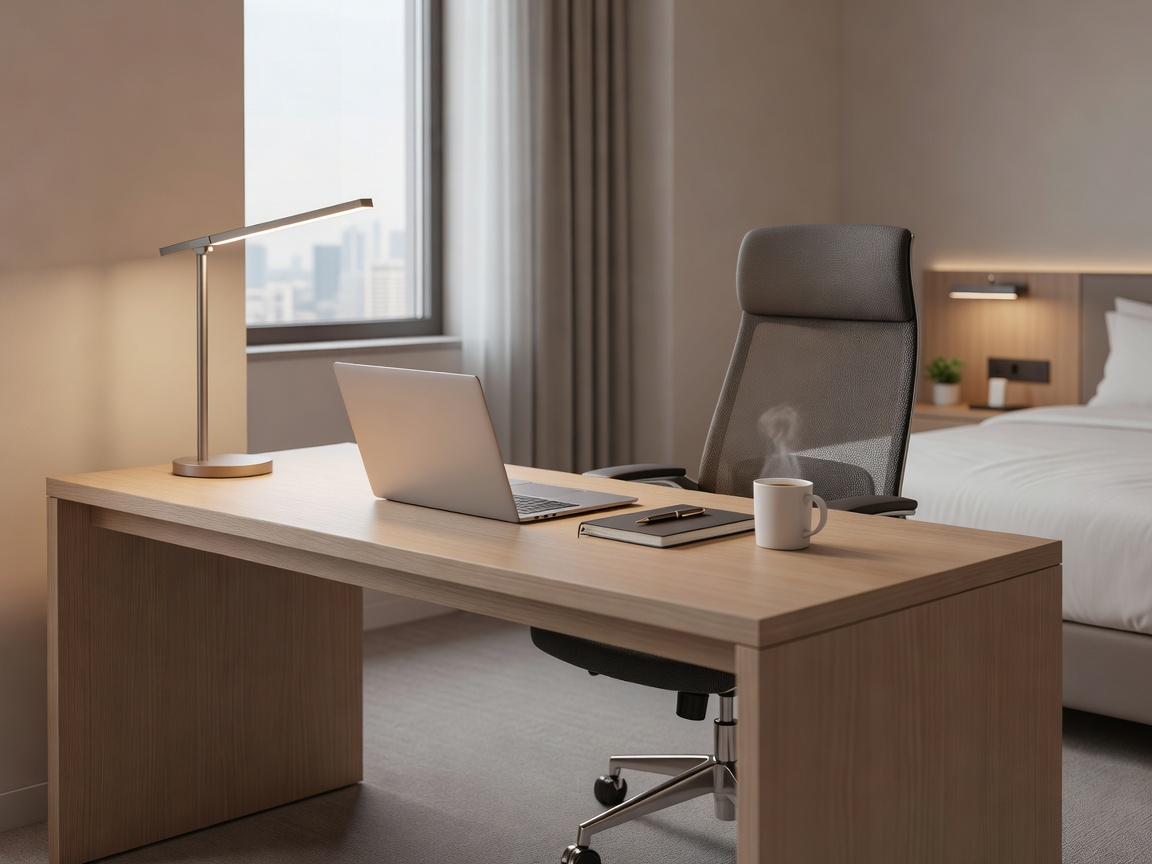
Business travel compresses ordinary routines into unfamiliar surroundings. A call may begin before breakfast; a presentation may need a final edit after a meeting; a suitcase may arrive hours before check-in. Useful hotel features reduce friction in those moments. Because provision varies by property, confirm the details directly before relying on a feature for an important task.
A workable desk and power
Consider whether the room offers a proper surface for a laptop, notes and a drink, with a chair that supports a useful stretch of work. A small decorative table is not necessarily a functional desk. Check for practical lighting, accessible power and enough room to organise materials without turning the bed into a workstation.
Charging needs can be easy to overlook. Consider how many devices you carry and whether your adapters will suit the destination. Do not assume that a particular socket, cable or charging arrangement is supplied. If a specific setup is essential, ask the accommodation in advance and have a backup plan for your own equipment.
Reliable internet and quiet
Internet access matters for messages, shared documents and calls, but “available” does not tell you how well it will support your use. For video meetings or large files, ask about connection arrangements, access conditions and any limits that affect your work. If the task is business-critical, plan a backup connection rather than depending on an unconfirmed service.
Quiet can be as important as connectivity. Room position, street noise, lifts and neighbouring activity can affect concentration and sleep. If you have an early presentation or remote meeting, request a quieter room and check what can be guaranteed. No general description can promise a particular sound level, so treat this as a preference to clarify rather than an assumption.
Meeting spaces and flexible common areas
A dedicated meeting room can be valuable for confidential discussions, presentations or a group working session. Ask about availability, capacity, equipment, booking terms and accessibility. Do not infer that a business-themed lobby includes a private meeting space. If a formal venue is necessary, compare the hotel’s arrangements with meeting facilities at the office or conference location.
Flexible common areas can help when a guest needs somewhere to read, wait or work between appointments. Their usefulness depends on seating, noise, opening arrangements and whether the space is appropriate for a call. A lively shared area may be pleasant for informal tasks but unsuitable for confidential conversations. Match the setting to the work.
Breakfast, luggage and reception
Breakfast arrangements influence an early start. Check serving times, whether food is included in the booking terms, and whether an alternative is available if you need to leave before normal service. Avoid assuming that the timing or format will suit a particular schedule.
Luggage storage can be useful when arrival precedes room access or departure follows check-out. Confirm the arrangement and any relevant conditions. Reception hours also matter for late arrivals, early departures and questions during a stay. Verify how the property handles these situations instead of relying on a generic “24-hour” impression from a listing.
Accessibility and transport convenience
Accessibility is individual and specific. Check step-free routes, lifts, room arrangements, bathroom details and any other features relevant to your needs. A broad accessibility label may not answer a practical question. Contact the accommodation with precise requirements and request clear confirmation before booking.
Transport convenience belongs on the facilities checklist, even though it is a feature of the location rather than the building. Consider the route to offices, stations, airports and conference venues, alongside the availability of nearby taxis or public transport when appropriate. See the hotel location guide for first- and last-mile factors.
Separate useful from ornamental
Generic design cues—glass meeting-room walls, a smart lobby or a prominent desk—do not prove that a space works for a particular task. Translate broad claims into questions: Can you work at a desk? Is the connection suitable for calls? Is a meeting space bookable? Can the property accommodate your arrival time or access needs? Can you reach the places on your itinerary without awkward transfers?
Prioritise by trip length and schedule. A one-night visit may put location, quiet and a reliable internet connection first. A longer stay can make workspace, laundry or common areas more important, where available. A conference visitor may value luggage handling and early breakfast; a meeting organiser may need a bookable room. Compare districts as well as amenities with the district guide, then use the criteria guide to settle the balance.