Hotel Location
The useful question is not simply “How close is the hotel?” It is whether the complete route—from arrival point to room, office, venue and evening plans—works with the shape of the trip.
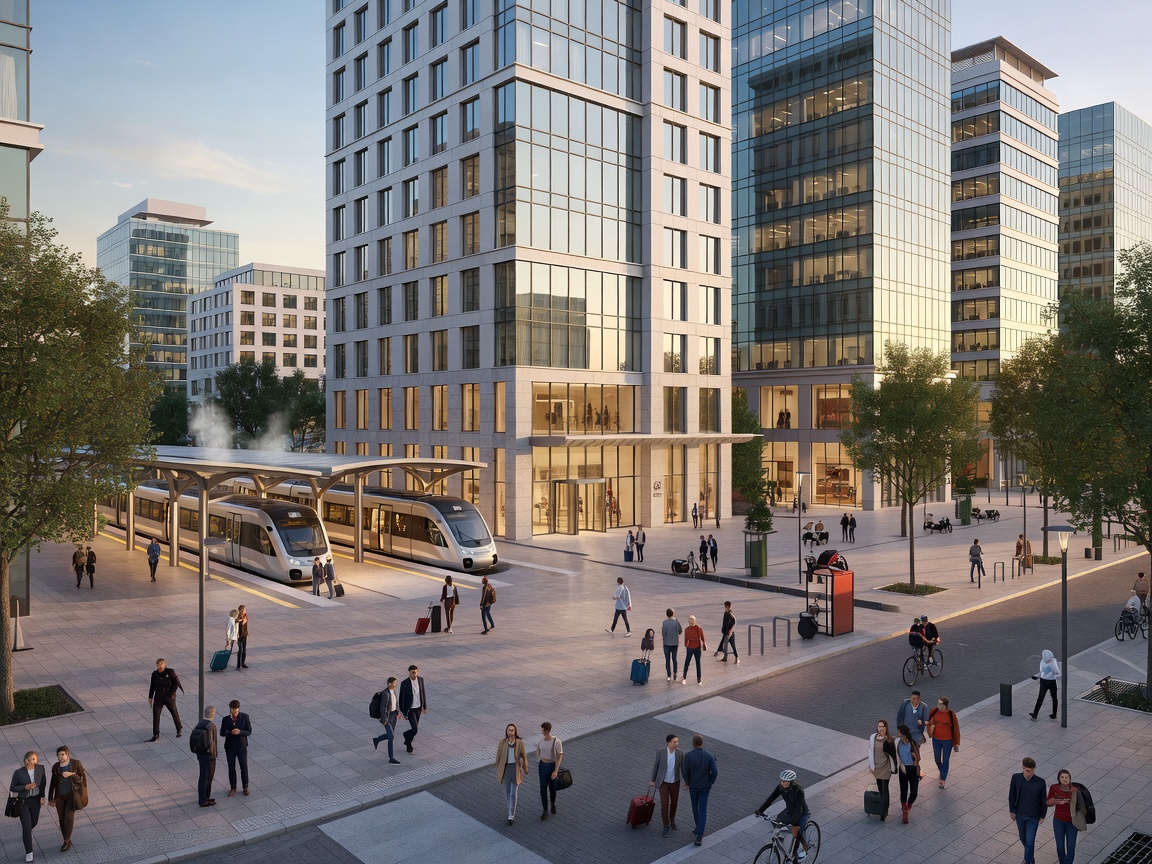
A map pin can make a location look wonderfully simple. The real journey adds pavement, entrances, ticketing, interchanges, crossings and the last stretch on foot. A hotel that appears close to a meeting address may sit across a busy road or outside the most convenient transit exit. Another, slightly farther away, may offer a direct route and an easier morning. Treat location as a connected sequence, not a straight line.
Begin with the destination
Find the exact office, meeting venue or exhibition entrance before comparing hotels. Commercial districts can cover a broad area, and a venue may have several public approaches. Look at the route on foot as well as the line on a map. Consider whether it is a direct street walk, an indoor passage, a station transfer or a route that depends on a bridge or large junction.
For a day of appointments in one office cluster, accommodation within walking range may save repeated journeys. If meetings are spread across a city, being beside one address can become a constraint. A central neighbourhood connected to several districts may be a more balanced base, even if the first destination is not the nearest possible point.
Railway stations and airports
Arrival convenience and daily convenience are related but not identical. A hotel near a railway station can reduce the first and final legs of a train-based visit. A station may also connect to several commercial areas, making it useful when the schedule moves around. However, the nearest station is not automatically the most helpful one: compare the services and transfers needed for the work destination.
Airport proximity is valuable for a late arrival, early departure or a short stop with work nearby. It can be less useful when the day is spent in the city centre and each trip requires a separate journey into town. Airport convenience is not city-centre convenience. Consider the full door-to-door journey, including connections and any time spent crossing the city.
Underground, metro, tram and the last mile
Urban rail and tram networks can widen the choice of practical neighbourhoods. A short ride may connect a central base to La Défense, Zuidas or another distinct office area. But count the pieces: walk to the stop, wait, transfer if necessary, and walk from the destination station. A journey with one direct connection can feel easier than a shorter distance involving two interchanges.
First- and last-mile access matters particularly for bulky luggage, mobility needs, bad weather or an early appointment. Check whether a station entrance lies on the side of the district you need. A large commercial quarter may have multiple exits and a spread of buildings. The route between the platform and the street can matter just as much as the ride.
Conference venues and exhibition sites
When a conference or trade event anchors the visit, proximity to its actual entrance can be a powerful convenience. Large venues may have separate halls and access points, so verify the destination rather than relying on a broad venue name. An accommodation search beside the venue may reduce daily commuting, especially when the programme starts early or finishes late.
The trade-off is what surrounds the venue. Exhibition zones and conference areas can be quiet between events or after business hours. If dining and evening activity are important, compare a nearby mixed-use quarter or a central neighbourhood with a clear connection to the venue. You may prefer a slightly longer daily commute in exchange for a more varied base.
Offices, dining and the evening
Proximity to offices can save time between appointments and make it easier to return to the room during a long day. Yet the closest block is not always the best location for the whole trip. Check whether restaurants and everyday amenities are within an easy walk, and whether the area changes character after offices close. Financial districts, transport zones and mixed-use neighbourhoods have different rhythms.
For business dining, identify the likely meeting area and consider the return route at the end of the evening. A central location can provide more choice, while a hotel inside a business district may shorten the trip back after a late appointment. Neither arrangement is automatically better; the itinerary determines the balance.
Distance is not journey quality
Compare routes at the times you expect to travel, using reliable current transport information when planning. This guide does not provide live timetables or guarantee route conditions. Account for a transfer, access needs, luggage, walking pace and the possibility that an unfamiliar station takes longer to navigate. A compact map distance can conceal awkward access; a longer but direct trip may be easier to repeat.
Choose a location that works for the most important journey without making the rest of the day unnecessarily difficult. Use the city guide to understand commercial geography and district types to assess the surrounding atmosphere. Then bring facilities and trip priorities into the final choice with business hotel features and the stay-planning guide.