Choosing a Business Stay
The strongest choice is the one that supports the actual itinerary. Set the priorities first, then compare districts and accommodation against the journeys, working needs and daily rhythms that matter most.
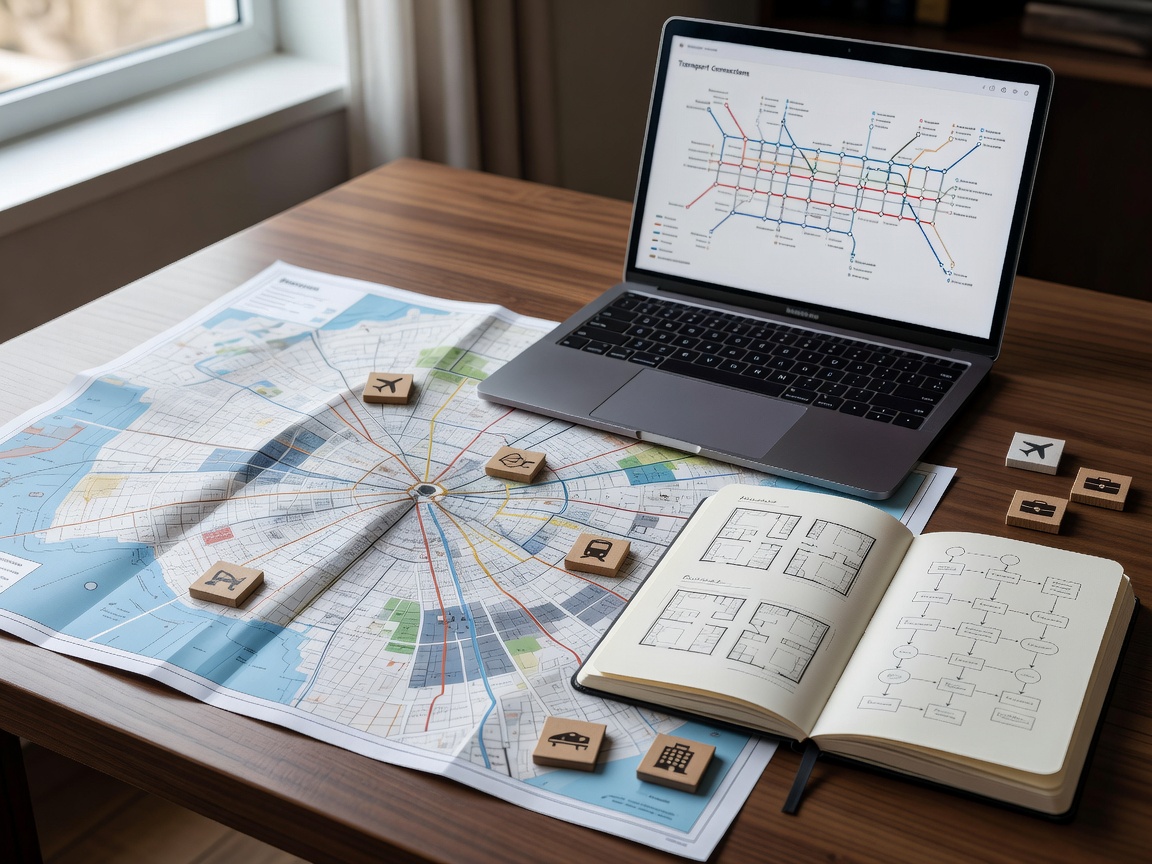
A business stay is a collection of small transitions: arriving with luggage, getting to the first appointment, finding a meal, returning to work and leaving on time. A hotel can look attractive in isolation and still make those transitions harder. Begin with the work calendar and choose the district before narrowing down the room.
1. Map the itinerary
List the places that matter: office addresses, client meetings, conference or exhibition venues, railway stations and airport terminals. Mark which destination is fixed and which may change. A trip centred on one office calls for a different base from one that crosses a city several times. Use the exact address where possible; a district name can cover many blocks.
Think about travel times at the hours you expect to move, not only a map’s straight-line distance. Walking routes, station entrances, transfers and access needs affect the real journey. A nearby hotel may be separated from a meeting by a difficult crossing, while a farther location could offer a simpler direct connection.
2. Choose the district character
Financial districts can provide convenient access to concentrated offices, but their evening life may differ from a mixed-use central neighbourhood. Exhibition areas can be useful for event schedules, while a transport-linked location can help with a train-based visit or appointments in multiple parts of town. Waterfront and regenerated quarters may have a different street scale from historic centres.
Compare the surroundings as carefully as the accommodation. Are restaurants and everyday amenities close enough for your routine? Does the area suit a late finish or early start? Is an active evening environment helpful, or would a quieter setting better support rest? The district types guide explains how different urban forms influence these choices.
3. Balance convenience and journey time
Proximity to an office is most valuable when appointments are concentrated there or the schedule has little slack. A nearby location can reduce repeated commuting and make a brief return to the room possible. If work is spread across town, prioritise connections that serve the whole itinerary rather than the nearest point to one meeting.
Airport convenience and city-centre convenience are separate criteria. A hotel near an airport may support an early flight or a short stop with nearby work, but it may require more time for central meetings. A central hotel can make urban appointments easier while leaving a longer departure journey. Compare door-to-door routes and the cost in time and effort, without assuming one arrangement suits every trip.
4. Match workspace to the work
For a short stay with little desk time, a well-located room, quiet and a dependable connection may be enough. A multi-day work stay may call for a usable desk, accessible charging, suitable lighting and a calm place for calls. If you need a private meeting area, confirm whether one can be arranged, and whether the office or conference venue is a better option.
Do not equate decorative business cues with functional facilities. Ask direct questions about what matters: desk dimensions, internet access, meeting-room arrangements, luggage storage, reception hours and breakfast timings. For accessibility, describe the requirement precisely and seek a clear response from the property. Use the facilities guide to turn broad expectations into practical checks.
5. Consider transport, dining and access
Rail access can make an arrival and onward journey easier; public transport may connect a hotel to multiple office areas. Look beyond the nearest stop to the actual services, transfers and walking route. Include the first and last mile, particularly if you travel with luggage, have an early start or need step-free access. Current route information should be checked close to travel because services and conditions can change.
Dining is part of the workday, not merely an optional extra. A central neighbourhood may offer more choice after meetings, while an office district may reduce the trip back from an appointment. Think about whether you expect client meals, quick solo dinners or a quiet evening. Select a location that makes the normal daily rhythm manageable.
6. Scale the decision to trip length
For a one-night meeting, prioritise a straightforward arrival, short route to the appointment and a reliable place to rest. Conference visitors may place venue access, early breakfast and luggage arrangements near the top. For a multi-day stay, workspace, transport flexibility, food options and the wider neighbourhood become more influential because the same trade-offs repeat.
Accessibility, personal routine and the hours of the programme can override general preferences. A guest who needs a specific access arrangement should verify it before booking, rather than treating a broad label as confirmation. A late arrival may make reception arrangements decisive. There is no universal order of importance; give extra weight to the criteria that would cause the greatest disruption if they failed.
Make a clear comparison
Write down a short list of non-negotiables and a second list of useful extras. Compare candidate locations against each item using confirmed details, not imagined rankings or generic “best” claims. Keep a note of the exact route to your main work destination, a backup route and the services you need the property to provide.
District selection can matter as much as hotel selection because it shapes every journey beyond the front door. Start with European commercial centres, assess the route using Hotel Location, and revisit the features that support your schedule. A well-matched base makes the city feel less like a maze and more like a sequence of manageable steps.